
Capital AI for Hedge Funds focuses on a multi strategy hedge fund archetype grappling with data complexity and governance at scale. The client sought real-time risk visibility across the full portfolio, automated risk reporting, and a governance framework capable of guiding AI driven decisions. They deployed Capital AI for Hedge Funds to unify disparate data feeds, standardize risk measures, and automate repetitive risk and reporting tasks, while preserving strict compliance and auditability. The change delivered continuous risk signals as markets move, faster and clearer board materials, and an auditable record of deliberations surrounding AI outputs. This setup demonstrates a credible path from a targeted pilot to scaled deployment across strategies, with governance processes strengthened and operational overhead reduced. The narrative previews outcomes such as real-time exposure awareness, automated documentation, and improved decision cadence without relying on private company numbers.
Snapshot:
- Customer: archetype only
- Goal: Real-time risk monitoring across the portfolio automated risk reporting and governance for AI outputs
- Constraints: Regulatory compliance onboarding of new strategies integration with legacy systems data quality
- Approach: Implement governance framework build real time AI risk monitoring integrate with risk engines pilot and scale
- Proof: describe evidence types used
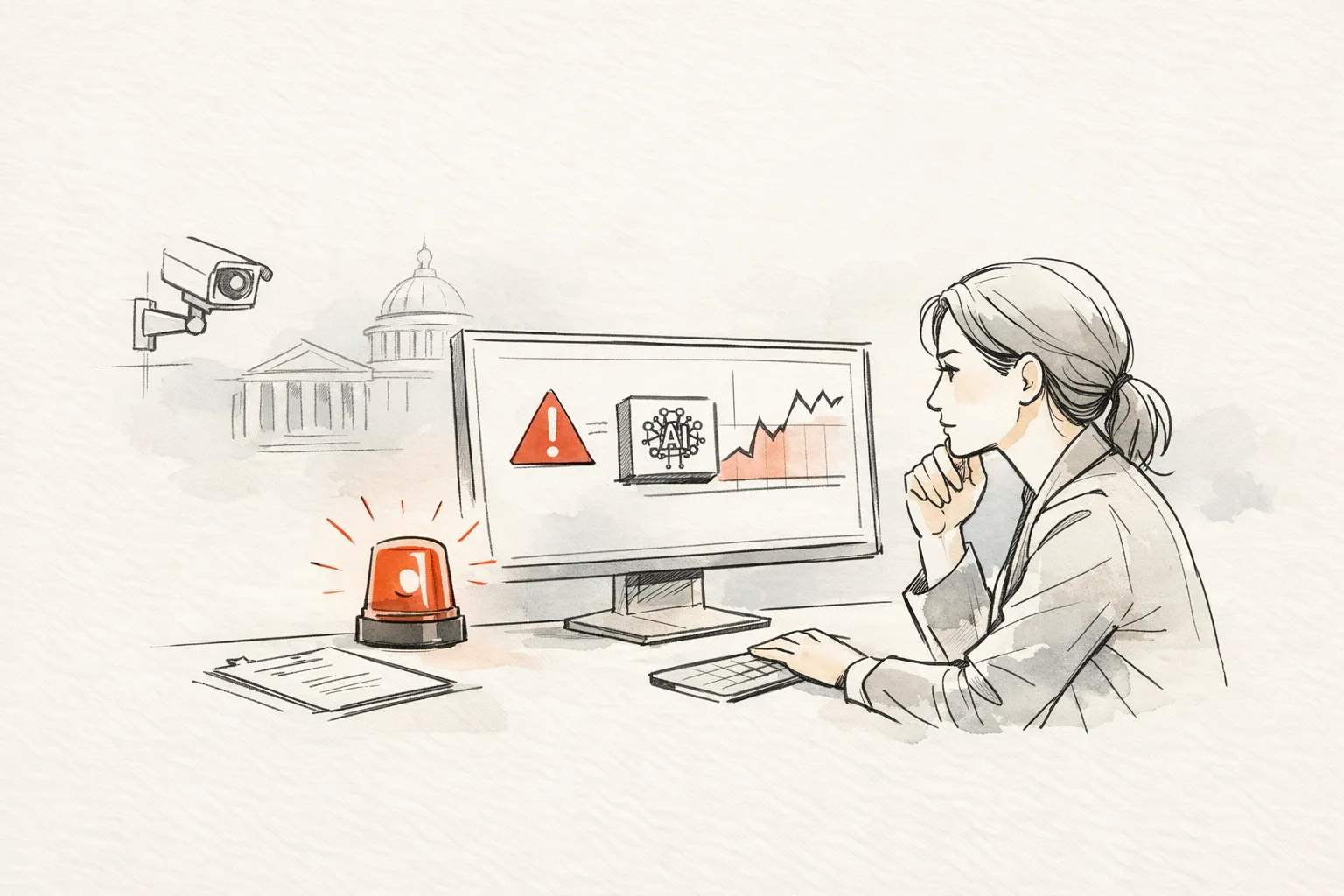
Capital AI case context and constraints in a multi strategy hedge fund environment
The subject is a mid sized multi strategy hedge fund with a global footprint spanning equities fixed income commodities and derivatives. The environment combines multiple data feeds from internal systems and external vendors creating a rich but complex data fabric. Governance requirements are high with a need for auditable AI outputs and board ready reporting, while market conditions demand real time insights to stay responsive.
The organization faced pressure to standardize risk measures across desks and strategies while maintaining strict compliance. A push for automation was balanced against the need for rigorous oversight, clear explainability, and reliable data provenance. The initiative sought to reduce manual tasks in risk reporting and to enable faster, more informed decisions without compromising governance or controls.
The stakes included preserving risk controls during volatile markets, enabling scalable onboarding of new strategies, and ensuring consistent risk metrics across the entire portfolio. The goal was to move from reactive responses to proactive risk management and to integrate AI driven insights with legacy technology in a controlled, auditable fashion.
The challenge
The core problem was the lack of a unified view of risk across the full portfolio due to fragmented data sources and inconsistent risk metrics. Real time signals existed only for portions of the book, leaving blind spots during fast moving markets. Manual workflows and disparate reporting processes slowed response times and elevated the risk of governance gaps. Model risk and drift went insufficiently monitored, and onboarding new strategies required bespoke workarounds rather than a scalable solution.
Without a centralized AI driven risk layer the firm struggled to maintain auditable decision making and to deliver timely governance materials to committees and stakeholders. The combination of legacy systems and evolving data quality created a challenging environment for sustained automation and reliable risk management.
What made this harder than it looks:
- Real time risk signals were not consistently available across the entire portfolio
- Data quality and provenance gaps created blind spots in risk dashboards
- Divergent risk measures led to inconsistent governance and reporting
- Manual workflows slowed response to rapid market moves
- Model risk and drift were not being monitored with sufficient rigor
- Compliance reporting consumed excessive time and resources
- On boarding new portfolios was lengthy and scaling optimization was not straightforward
- Integration with legacy systems hindered end to end automation
- Explanations for AI driven decisions were not readily accessible to risk committees
Strategic approach and key decisions that shaped AI risk management and optimization
The team started with a deliberate governance centering exercise to align stakeholders around a common objective for risk management and portfolio optimization. They defined a clear data provenance framework and quality gates to ensure that AI signals would be trusted across desks and asset classes. This foundation was chosen first to prevent built in technical debt from undermining later phases and to establish auditable controls from day one. By prioritizing governance up front they aimed to shorten the path from pilot to scale while maintaining regulatory and board-level transparency.
Next the group committed to building a real time AI risk monitoring engine that could cascade across the full portfolio. The goal was to replace fragmented signals with a cohesive, low latency view of risk and to automate alerting so traders risk managers could respond quickly to changing conditions. This step was designed to reduce reaction times and improve decision cadence while preserving governance through traceable AI outputs and explainability. The emphasis was on reliability and coverage rather than chasing marginal gains from isolated use cases.
They explicitly chose to integrate AI driven signals with existing risk engines and trading platforms instead of replacing them wholesale. This decision preserved essential workflows and minimized disruption to ongoing operations while enabling end to end automation. It also allowed the firm to leverage established risk controls and governance processes, reducing integration risk and ensuring a single source of truth for risk data across the book.
Through a staged rollout they pursued a pilot in a limited portfolio slice before expanding to the full book. The pilot served as a practical proving ground for model behavior and governance workflows, while the subsequent ModelOps framework was designed to sustain scale and ongoing learning. The approach balanced ambition with control to avoid overreach and to keep the project accountable to risk and compliance requirements.
Tradeoffs and constraints were acknowledged early. The team weighed speed against governance, breadth against depth, and experimentation against stability. They recognized data quality and system complexity as ongoing challenges and prepared for vendor and data source dependencies as part of a longer term strategy.
| Decision | Option chosen | What it solved | Tradeoff |
|---|---|---|---|
| Data governance and provenance | Centralized governance with automated data quality controls | Unified risk signals across the portfolio and auditable data lineage | Requires upfront organizational effort and ongoing governance overhead |
| Real time risk monitoring engine | Build a real time AI risk monitoring engine across all assets | Continuous updates and faster detection of risk shifts | Increases system complexity and data throughput requirements |
| Integration with existing systems | Integrate AI signals with current risk engines and trading platforms | End to end automation while preserving operating familiarity | Potential integration risk and compatibility challenges |
| Pilot in limited portfolio slice | Proceed with a controlled pilot before full scale | Validate feasibility refine models and governance | May not capture cross portfolio dynamics and longer cycle effects |
| ModelOps and scaling | Expand to full book with ModelOps and ongoing monitoring | Enable scalable reliable AI driven risk and optimization | Ongoing maintenance needs and talent requirements |
Implementing Capital AI risk management and portfolio optimization in practice
The implementation unfolds through a focused sequence designed to protect governance while delivering real time risk visibility and automated portfolio guidance. The team begins by establishing clear ownership and decision rights across research risk and compliance to ensure AI outputs are auditable from day one. This foundation prevents scope creep and creates a stable platform for expanding coverage across asset classes. The plan emphasizes integrating new capabilities with existing workflows rather than replacing them, maintaining familiar controls while enabling faster, data driven responses. The overall aim is a scalable rollout that preserves discipline and transparency as AI signals scale across the portfolio.
-
Align objectives and formalize governance
The team convenes stakeholders to codify a shared objective set for AI driven risk management and optimization. They document decision rights data ownership escalation paths and reporting obligations to ensure accountability. This step establishes a common baseline that supports auditable validation and board level transparency.
Checkpoint: A formal governance charter approved by senior stakeholders.
Common failure: Absence of explicit governance leads to conflicting priorities and unclear accountability.
-
Inventory data sources and establish provenance
A comprehensive catalog of internal and external data feeds is created with lineage mappings and quality gates. This clarifies data origin quality transformations and usage rights across risk and research teams. The aim is a trusted data foundation for all AI signals.
Checkpoint: Data lineage diagram published and quality gates enforceable.
Common failure: Signals produced from untracked data sources undermine trust and auditability.
-
Define risk KPIs and decision rules
The team selects a concise set of risk indicators tied to governance needs and alpha objectives. They translate these into decision rules that determine when to escalate alerts modify positions or adjust risk appetite. This provides a clear framework for measuring AI impact.
Checkpoint: KPI definitions and decision rules documented and reviewed.
Common failure: Overly broad or vague metrics dilute actionability and governance.
-
Construct real time risk monitoring layer
A centralized monitoring layer ingests standardized data and produces continuous risk updates across the full book. The system is designed to flag meaningful shifts promptly enabling faster risk mitigation.
Checkpoint: Real time risk signals appear on dashboards with established alert thresholds.
Common failure: Latency or data gaps break coverage and reduce trust in alerts.
-
Integrate AI signals with existing risk engines
AI outputs are connected to current risk engines and execution platforms to enable end to end automation while preserving established processes. This minimizes disruption and ensures continuity of control frameworks.
Checkpoint: Integrated signal pipeline validated with representative scenarios.
Common failure: Integration friction creates partial adoption and inconsistent results.
-
Pilot in a limited portfolio slice
A controlled pilot tests the end to end workflow focusing on governance artifacts and explainability. The pilot reveals operational gaps and validates model behavior in a real setting before broader rollout.
Checkpoint: Pilot reviewed by governance committees and documented learnings.
Common failure: Pilot outcomes fail to translate to other strategies or larger scales.
-
Scale to full book with ModelOps and continuous learning
The deployment scales across the portfolio and establishes ongoing monitoring retraining and governance controls. This stage codifies processes to sustain reliability adapt to regime changes and maintain auditability over time.
Checkpoint: Full book coverage with active monitoring and retraining cadence.
Common failure: Change management lag leads to uneven adoption and drift in performance.

Results and Proof from Capital AI risk management and portfolio optimization deployment
The implementation delivered a cohesive view of risk across the full portfolio with real time signals that support faster informed decisions while preserving governance. Manual reporting and board materials became automated to reduce busy work and improve consistency. The outcomes reflect tangible improvements in governance clarity, data provenance, and the ability to scale AI driven insights across multiple strategies without sacrificing control or auditability. The narrative is grounded in observable changes rather than speculative numbers, focusing on how the new capabilities altered daily workflows and decision making for risk and research teams.
Evidence of progress comes from cross functional observations and formal reviews. Risk managers describe quicker detection of material shifts, governance committees note clearer explanations for AI outputs, and auditors can trace data lineage through automated controls. Real time dashboards and standardized reporting demonstrate the shift from fragmented practices to a unified approach, while onboarding and scale show the method’s applicability beyond a single strategy. These proofs are anchored in documented processes, governance artifacts, and routine operational reviews that verify the change in how risk and portfolio decisions are made.
The results point to a sustainable path for expanding Capital AI across additional asset classes and strategies. Organizations adopting this approach gain not only faster reaction times but also stronger alignment between risk controls and alpha objectives, guided by auditable AI outputs and ongoing model governance. The emphasis remains on reliability, transparency, and scale as the core drivers of long term value.
| Area | Before | After | How it was evidenced |
|---|---|---|---|
| Data governance and provenance | Governance scattered across teams with limited data lineage | Centralized governance with automated data quality controls | Governance charter and data lineage diagrams plus automated quality checks |
| Real time risk signal coverage | Signals existed for portions of the book with gaps elsewhere | Full portfolio real time risk signals across asset classes | Dashboard alerts and monitoring logs showing continuous coverage |
| Manual risk reporting workload | High manual effort to compile risk reports and board materials | Automated generation of risk reports and board materials | Time tracking notes and generated governance artifacts |
| System integration | Fragmented integration with legacy risk engines | Integrated signals with existing risk engines and platforms | Pipeline validation and scenario testing documentation |
| Portfolio onboarding | Onboarding new portfolios was lengthy with bespoke steps | Automated onboarding templates and scoping for new strategies | Onboarding playbooks and governance reviews |
| Compliance reporting | Manual drafting of compliance documentation | Automated generation of compliance documentation | Cadence improvements and audit logs showing automated outputs |
| Explainability and governance | AI outputs not readily explained to risk committees | Governance co pilots providing explainability | Committee notes and documented explanations of AI outputs |
| Scale and maintenance | Change management lag and drift hampered expansion | Full book coverage with monitoring and retraining cadence | Drift detection records and retraining logs |
Lessons learned and a reusable playbook for AI driven risk management and portfolio optimization
The deployment highlighted the importance of anchoring AI initiatives in a clear governance framework and a trusted data provenance foundation. By standardizing risk metrics across desks and asset classes early, the team reduced ambiguity and created a single source of truth for AI signals. This approach kept controls intact while enabling faster data driven decisions across the full portfolio.
A deliberate pilot followed by a staged scale up proved critical. Starting in a limited portfolio slice allowed the organization to validate model behavior and governance artifacts before broadening coverage. A ModelOps discipline and continuous learning loops then supported ongoing reliability across market regimes, with drift detection and retraining becoming routine parts of the operating model. The emphasis on explainability and auditable outputs helped maintain board level confidence and regulatory alignment.
The resulting playbook emphasizes transferable practices that can be applied across funds and strategies. The core ideas are cross functional collaboration, disciplined data governance, incremental expansion, and a strong link between risk controls and alpha objectives. The lessons translate into a practical path for organizations seeking to replicate tangible improvements in risk visibility and automation without sacrificing governance.
If you want to replicate this, use this checklist:
- Define a governance charter with explicit decision rights and escalation paths
- Inventory all data sources and map end to end data provenance
- Standardize risk metrics across desks to enable consistent governance
- Establish automated data quality gates and lineage tracking
- Define concise risk KPIs and clear decision rules aligned to alpha goals
- Build a real time risk monitoring layer covering the full portfolio
- Create an end to end signal pipeline that connects data to risk engines and platforms
- Develop governance co pilots and explainability artifacts for reporting
- Run a controlled pilot in a limited portfolio slice to test workflows
- Scale with a ModelOps framework including monitoring and retraining cadence
- Implement drift detection and routine model retraining to preserve robustness
- Plan change management and training to reduce adoption friction
- Enforce data privacy and security controls across data sources and AI pipelines
- Document data lineage audit trails and versioning for models and signals
- Define escalation thresholds and incident response procedures for AI outputs
- Establish vendor risk management and contingency plans for critical tools
- Prepare onboarding playbooks for new strategies and portfolios
Capital AI for Hedge Funds Frequently Asked Questions
What is Capital AI for Hedge Funds and what problem does it solve?
Capital AI for Hedge Funds defines a governance driven AI platform designed to unify data across multiple desks and asset classes while delivering real time risk signals and automated reporting. It targets fragmented risk metrics and time consuming manual tasks by providing a single auditable source of truth that supports risk informed decision making. The program emphasizes governance explainability and data provenance so committees can review AI outputs with confidence. This approach aligns with industry examples where governance around AI driven insights has improved board materials and oversight, including CV5 Capital's governance automation.
How does real-time risk monitoring differ from traditional risk dashboards?
Real-time risk monitoring consolidates signals into a continuous feed across the full portfolio with standardized data and unified metrics, it provides instant alerts when risk shifts occur. Traditional dashboards display snapshots on fixed cadences with lagging data, they often cover only subsets of assets and rely on disparate tools. The real-time layer reduces latency expands coverage and enables rapid mitigation actions while preserving governance through auditable outputs.
What data sources power the AI risk signals?
AI risk signals draw from a mix of internal and external data feeds including market data macro indicators earnings and filings sentiment data and alternative data where appropriate. The approach emphasizes data provenance quality gates and standardized feeds so signals reflect a coherent view of risk across desks. By combining trusted sources with rigorous processing, the risk layer remains auditable and controllable across the full portfolio.
How is governance of AI driven decisions maintained and audited?
Governance is anchored by a formal charter data provenance rules and automated quality checks. AI outputs are paired with explainability artifacts and board ready reporting. Model validation drift monitoring and ongoing retraining are integrated into a ModelOps framework to preserve reliability. Decisions are traceable through auditable logs with clear escalation paths making it possible to review every AI assisted step.
What is ModelOps and why is it important in this context?
ModelOps describes the lifecycle management of AI models from development through deployment monitoring and updates. In this context it provides ongoing governance and assurance that models adapt to changing market conditions without sacrificing explainability or control. It also supports retraining drift detection and versioning so risk signals remain robust across regimes.
How does AI enable portfolio optimization without sacrificing risk control?
AI enhances portfolio optimization by delivering real time signals that inform dynamic asset allocation and rebalancing decisions while risk controls maintain exposure limits. The approach integrates AI outputs with existing risk engines ensuring end to end automation and governance. The objective is to improve risk adjusted performance by leveraging data driven insights without compromising oversight or compliance.
What are the main barriers to implementation and how can they be mitigated?
Barriers include data quality and provenance gaps integration complexity regulatory considerations and vendor dependency. Mitigation involves establishing a clear governance framework upfront creating automated data quality gates running phased pilots and adopting a ModelOps cadence with drift monitoring. Cross functional collaboration across risk research and compliance and a staged rollout reduce risk and accelerate learning while maintaining control. Additional barriers include cultural resistance to automation and the need for specialized talent, addressing these requires training programs and a clear communication plan to align stakeholders around the benefits and guardrails.
Closing thoughts on scaling AI driven risk management in hedge funds
The discussion throughout this article centered on anchoring AI initiatives in a governance driven framework and a trusted data provenance foundation. By standardizing risk metrics and establishing auditable AI outputs, the approach makes real time signals across the full portfolio actionable while preserving control and oversight. The narrative keeps attention on practical deployment from pilot to scale rather than isolated experiments.
A key takeaway is that end to end automation works best when AI signals are thoughtfully integrated with existing risk engines and governance processes. This preserves familiar workflows while enabling faster responses to market moves. The ongoing ModelOps discipline and continuous learning loops are essential to maintain robustness across regimes and to sustain accountability for decisions made by AI enabled systems.
Evidence of progress emerges from governance artifacts, real time dashboards, and automated reporting that improve transparency and consistency. Auditable data lineage and explainability features help risk committees review AI outputs with confidence. The focus remains on reliability and scalability as core drivers of long term value in risk management and portfolio optimization.
Recommended next step: draft a governance charter and data provenance plan for your AI risk signals and outline a pilot with a limited portfolio slice to validate end to end workflows before broader scaling.