
Welcome to a practical production oriented blueprint for bringing Capital AI to your trading desk. In this guide you will map measurable goals to AI outcomes assemble a complete data landscape decide whether to build or buy and deploy modular AI skills that coordinate research trading risk and client coverage. You will translate gaps into concrete use cases run backtests and scenario analyses and establish governance with audit trails before any live running. The simplest path starts with naming the top three performance gaps you want to close inventorying data sources and choosing a governance framework. Then assemble reusable AI skills assemble cross functional workflows pilot in production with a small scope monitor real production KPIs and scale across teams. By following this sequence you turn pilots into measurable improvements in speed accuracy and risk control.
This is for you if:
- Capital markets leaders responsible for end to end AI deployment across research trading risk and client coverage
- Heads of desk operations IT governance and risk seeking scalable AI production playbooks
- Cross functional teams coordinating research trading risk and client coverage who need measurable ROI
- Teams planning data infrastructure governance and vendor partnerships for AI enablement
- Compliance and audit teams ensuring outputs have traceability and explainability
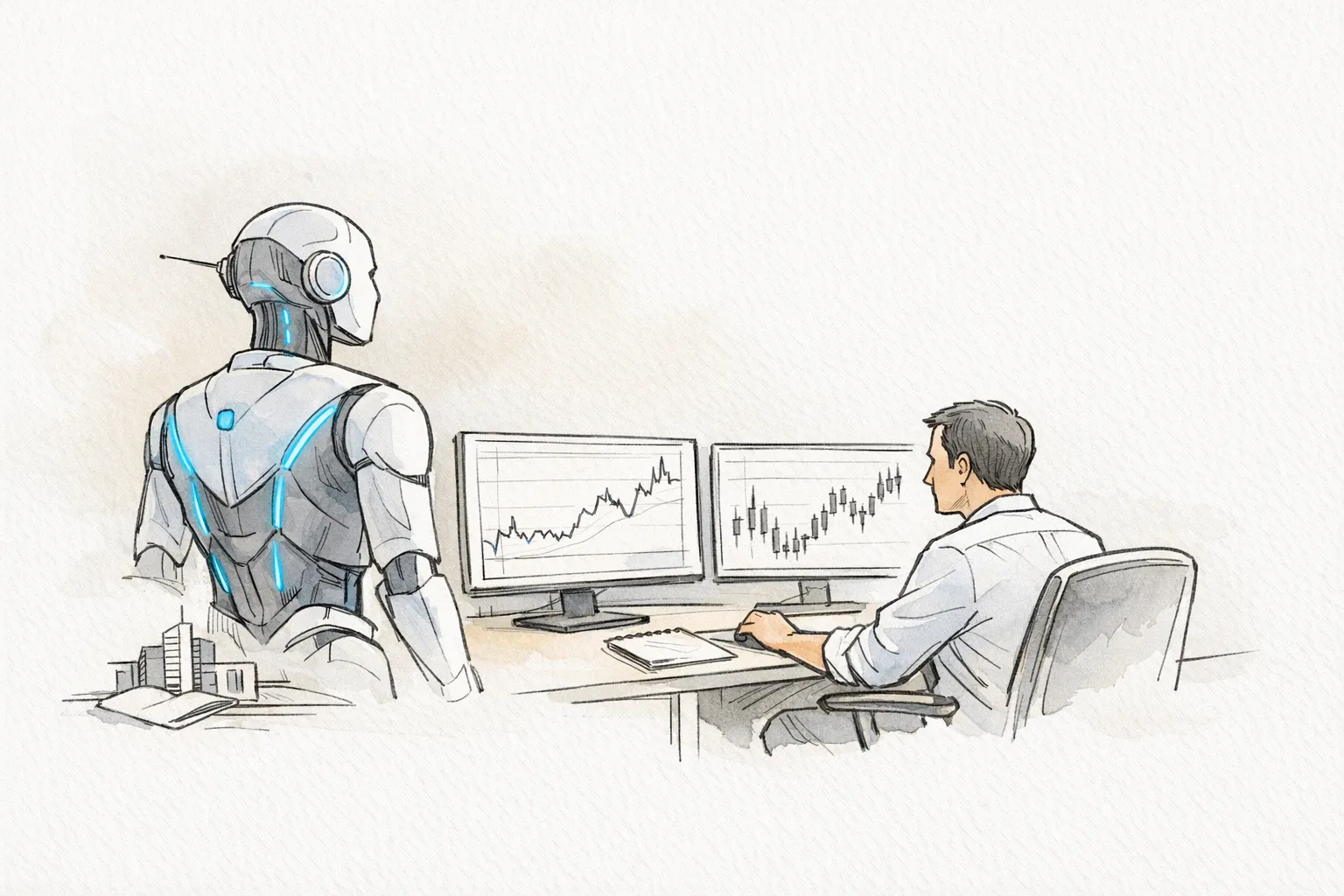
Prerequisites for Launching Capital AI on the Trading Desk
Prerequisites establish the foundation that ensures AI efforts translate into real production gains rather than pilots that drift. By agreeing on measurable objectives securing data access and aligning governance across research trading risk and client coverage you reduce risk speed up value delivery and enable scalable auditable AI workflows. Clear prerequisites also surface constraints early define acceptable risk profiles and create a repeatable path to production as you extend AI across multiple workflows.
Before you start, make sure you have:
- Clear, measurable production objectives for AI across research trading risk and client coverage
- Access to real-time and historical data including market feeds internal data and external or alternative data sources
- A robust data governance and data lineage plan
- Cross-functional alignment across research trading risk operations and IT
- A defined build versus buy plan with governance and risk considerations
- Production-ready infrastructure with security controls and scalable architecture
- A plan for rigorous model evaluation backtesting and scenario testing with golden sets
- Modular AI skills and an agent factory style framework to enable reuse
- An ongoing governance risk management framework including explainability and auditability
- A plan to operationalize AI capabilities across multiple workflows rather than isolated pilots
- Engagement with AI enablement partners or consultants if needed
- Availability of domain experts to guide model design and interpretation
- Clear KPIs and real-world production metrics for speed accuracy risk
- Data provenance and source citation requirements
- Change management and cross-team collaboration processes
- Compliance and regulatory considerations integrated from the start
- Plan to monitor and maintain AI systems in production with alerts and dashboards
Activate Capital AI Across Your Trading Desk with a Practical Step by Step
This procedure provides a focused sequence designed to move capital AI from concept to production on your trading desk. You will define precise goals and required data invest in a reusable set of AI skills and ensure governance and risk controls are built in from day one. By following the steps you will coordinate workflows across research trading risk and client coverage validate with controlled pilots and prepare for a scalable cross team deployment.
-
Identify gaps and outcomes
Meet with leadership to document production gaps tied to AI outcomes. Capture target KPIs and align them with the desk's strategic priorities. Translate gaps into concrete use cases for research trading risk and client coverage. Confirm stakeholders sign off on the plan.
How to verify: KPIs and use cases are clearly documented and approved by stakeholders.
Common fail: Scope creep dilutes focus and delays action.
-
Inventory data sources and assess sufficiency
List all data sources including market feeds internal data and external or alternative sources. Evaluate data quality lineage and accessibility. Prioritize signals with high signal to noise ratios and clear integration pathways. Create a data readiness scorecard to guide next steps.
How to verify: Data inventory completed with quality and lineage assessments.
Common fail: Incomplete data leads to weak models and misaligned expectations.
-
Decide build or buy with governance plan
Assess the time resources and risk of building in house versus buying from specialized providers. Document governance requirements including auditability explainability and ongoing evaluation. Choose a path that matches capabilities and speed to value.
How to verify: A formal build versus buy decision with a written governance framework.
Common fail: Rushed choices without governance or misalignment with business goals.
-
Map workflows to AI approaches
Assign the right AI approach to each workflow such as ML for pricing and risk GenAI for research and agentic AI for coordination. Create a blueprint that shows where data flows and how decisions are made. Ensure mapping aligns with risk controls and compliance.
How to verify: Each workflow has a defined AI approach and success criteria.
Common fail: Mismatched problem and technology leads to underperforming deployments.
-
Build modular AI skills
Develop reusable AI skills that can be composed into multiple agents across workflows. Focus on domain informed components with clear inputs and outputs. Use a catalog or registry to promote reuse and consistency.
How to verify: Modular skills exist and are discoverable, reuse rate in initial pilots.
Common fail: Skill sprawl creates duplication and governance gaps.
-
Create scalable AI workflows and agent coordination
Implement agent orchestration that coordinates signals across research trading risk and client coverage. Leverage an AI Agent Factory style framework to scale across teams. Source Establish interfaces for skill reuse and standardized data schemas. Lean on forward deployed experts to embed capabilities into your stack.
How to verify: End to end workflows exist with cross team integration and measurable throughput.
Common fail: Siloed solutions hamper adoption and scale.
-
Establish governance and compliance with audit trails
Put in place evaluation rubrics golden sets and explainability requirements. Create source citations decision trails and real time monitoring dashboards. Align with regulatory requirements and internal risk controls.
How to verify: Audit trails exist and governance reviews pass regular checks.
Common fail: Audits missing or outputs lack traceability.
-
Pilot in production and scale across teams
Run a controlled production pilot starting with a narrow scope but clear go/no go criteria. Collect real production KPIs and iterate rapidly. Plan a firm wide rollout with cross functional change management and training.
How to verify: Pilot results meet preset success criteria and sign off for scaling.
Common fail: Pilot drift and poor adoption stall broader rollout.

Verification Focused Checkpoints for Capital AI on the Trading Desk
This section explains how to confirm that Capital AI initiatives are delivering tangible production improvements. You will validate KPIs align with business goals and confirm data readiness governance and cross functional adoption. You will also verify pilots and monitoring systems and ensure scalable governance. By following these checks you can accelerate safe scaling while keeping risk controls and regulatory requirements in view.
- KPIs aligned with business goals and clearly documented
- Data readiness validated with lineage and quality checks
- Governance in place with audit trails and explainability
- Pilot results meet go no go criteria against baselines
- Cross functional adoption readiness confirmed across teams
- Production monitoring dashboards and alerting are active
- Security and compliance controls are in place
- Change management and training plans exist
| Checkpoint | What good looks like | How to test | If it fails, try |
|---|---|---|---|
| KPI alignment | KPIs directly reflect business goals and show measurable improvement | Review dashboards and compare to targets | Refine KPIs or adjust measurement plan |
| Data readiness | Data lineage documented, data quality validated, access stable | Run data quality checks and lineage audits | Clean data and revalidate, update data pipelines |
| Governance and audit trails | Outputs are traceable with sources cited and decision trails present | Audit trails reviewed by compliance | Implement missing trails and re-run verification |
| Pilot outcomes | Pilot delivered against go no go criteria and baselines met | Compare results to baseline metrics and gate criteria | Adjust scope or model and re-pilot |
| Adoption readiness | Cross functional teams trained, processes documented, leadership buy-in | Hold readiness assessments and user feedback sessions | Implement targeted change management and training |
| Production readiness | CI CD pipelines for AI, monitoring in place, security controls active | Run production like load test, verify alerting | Address infra or security gaps, harden deployment |
| Regulatory alignment | All outputs auditable, compliance reviews completed | Sign off from legal regulatory | Engage compliance and update controls |
Troubleshooting Capital AI on the Trading Desk
This section helps you diagnose and fix the issues that prevent Capital AI from delivering reliable production results. You will identify symptoms, diagnose root causes, and apply concrete, actionable remedies that preserve governance and risk controls while enabling scaled adoption across the desk.
-
Symptom: Outputs lack audit trails and explainability.
Why it happens: Governance gaps or missing logs and traceability in AI outputs.
Fix: Enable automatic source citations for every AI result and implement centralized decision trails with versioned logs. Ensure outputs include a traceable origin and rationale.
-
Symptom: Data quality issues disrupt model performance.
Why it happens: Incomplete data lineage, latency, or missing fields compromise signals.
Fix: Run regular data quality checks, implement a robust preprocessing pipeline, and enforce documented data lineage with versioning.
-
Symptom: Model drift degrades performance after deployment.
Why it happens: Market regime shifts, stale features, and inadequate retraining schedules.
Fix: Monitor feature drift, schedule controlled retraining with out-of-sample validation, and set drift alerts thresholds.
-
Symptom: Overfitting to backtests leads to poor live results.
Why it happens: Excessive hyperparameter tuning and over-optimization on historical data.
Fix: Use walk-forward validation, apply out-of-sample testing, and simplify models to reduce overfitting.
-
Symptom: Slow or inconsistent deployment across teams.
Why it happens: Fragmented architecture and lack of reusable AI skills.
Fix: Introduce a modular skill catalog and standardized APIs to enable rapid, consistent deployment across workflows.
-
Symptom: Alerts generate too many false positives.
Why it happens: Noisy data and poorly tuned alert thresholds.
Fix: Calibrate alert thresholds, implement adaptive thresholding, and add suppression rules for repetitive warnings.
-
Symptom: Security or data privacy concerns surface.
Why it happens: Inadequate access controls and incomplete data protection measures.
Fix: Enforce strict RBAC, implement encryption at rest and in transit, and perform regular security reviews and audits.
-
Symptom: Desk teams resist adoption or engagement drops.
Why it happens: Change management gaps and insufficient hands-on training.
Fix: Launch targeted training, demonstrate quick wins, appoint change champions, and provide ongoing support.
Common Next Questions About Capital AI on Your Trading Desk
- What is Capital AI on a trading desk? It is an AI enabled, agentic workflow that delivers real time insights, scalable operations, and compliant risk management across research trading risk and client coverage.
- How do I start moving AI from pilot to production? Begin by defining measurable gaps and concrete objectives then inventory data sources map each workflow to an AI approach pilot with a controlled scope and plan for scale.
- What data do I need to implement Capital AI? Real time and historical market data internal data such as pricing models and risk positions plus external or alternative data sources with strong data lineage and quality controls.
- Should I build or buy AI capabilities? Choose based on resources timelines and governance, use a formal build versus buy assessment and consider partnerships with AI enablement providers if appropriate.
- How do I ensure governance and auditability? Put in place evaluation rubrics golden sets source citations explainability and audit trails so outputs are traceable and compliant.
- What is an AI Agent Factory and why does it matter? It is a modular framework that creates reusable AI skills which can be composed to coordinate workflows and scale across teams.
- How should I measure success for Capital AI initiatives? Track real world KPIs such as speed accuracy risk and usability and monitor production dashboards for ongoing ROI validation.
- What common pitfalls should I avoid? Ambiguity about gaps lack of domain expertise data quality issues weak governance pilot drift and slow adoption.
- How can teams coordinate AI across research trading risk and client coverage? Map each workflow to the appropriate AI approach maintain modular skills and implement agent coordination supported by clear governance.
Common Next Questions About Capital AI on Your Trading Desk
What is Capital AI on a trading desk?
Capital AI on a trading desk is an integrated, agentic workflow that leverages AI and human expertise to deliver real time market insights, scalable operations, and compliant risk management across research trading risk and client coverage. It moves AI from isolated pilots to production with measurable improvements in speed accuracy and risk control while maintaining governance and regulatory compliance.
How do I start moving AI from pilot to production?
Begin by defining measurable gaps and concrete objectives then inventory data sources map each workflow to an AI approach pilot with a controlled scope and plan for scale. Establish governance and evaluation frameworks deploy production ready infrastructure and monitor real world KPIs as you expand to additional workflows.
What data do I need to implement Capital AI?
You will need real time and historical market data plus internal data such as pricing models risk positions and client outputs along with external or alternative data sources. Ensure robust data lineage data quality controls and secure access to enable reliable AI signals.
Build or buy AI capabilities?
Decide based on resources timelines and governance. A formal build versus buy assessment should guide the choice and partnerships with AI enablement providers can be considered when speed to value matters and internal capabilities are limited.
How do I ensure governance and auditability?
Implement evaluation rubrics golden sets source citations explainability and audit trails so outputs are traceable and compliant. Regular governance reviews and real time monitoring help maintain risk controls and regulatory alignment across all AI enabled workflows.
What is an AI Agent Factory and why does it matter?
An AI Agent Factory is a modular framework that creates reusable AI skills which can be composed to coordinate signals across multiple workflows. It enables scaling across teams reduces duplication and improves consistency through standardized interfaces and governance.
How should I measure success for Capital AI initiatives?
Track real world KPIs such as speed accuracy risk and usability and monitor production dashboards for ongoing ROI validation. Establish clear success criteria before deployment and iterate based on feedback and performance against baselines.
What common pitfalls should I avoid?
Avoid vague gaps overreliance on generic AI without domain context data quality issues governance gaps pilot drift and slow adoption. Build cross functional alignment early and invest in change management to ensure sustainable scaling.